

Reducing Nighttime Lighting to Help Birds in West Michigan
Light Pollution + Birds
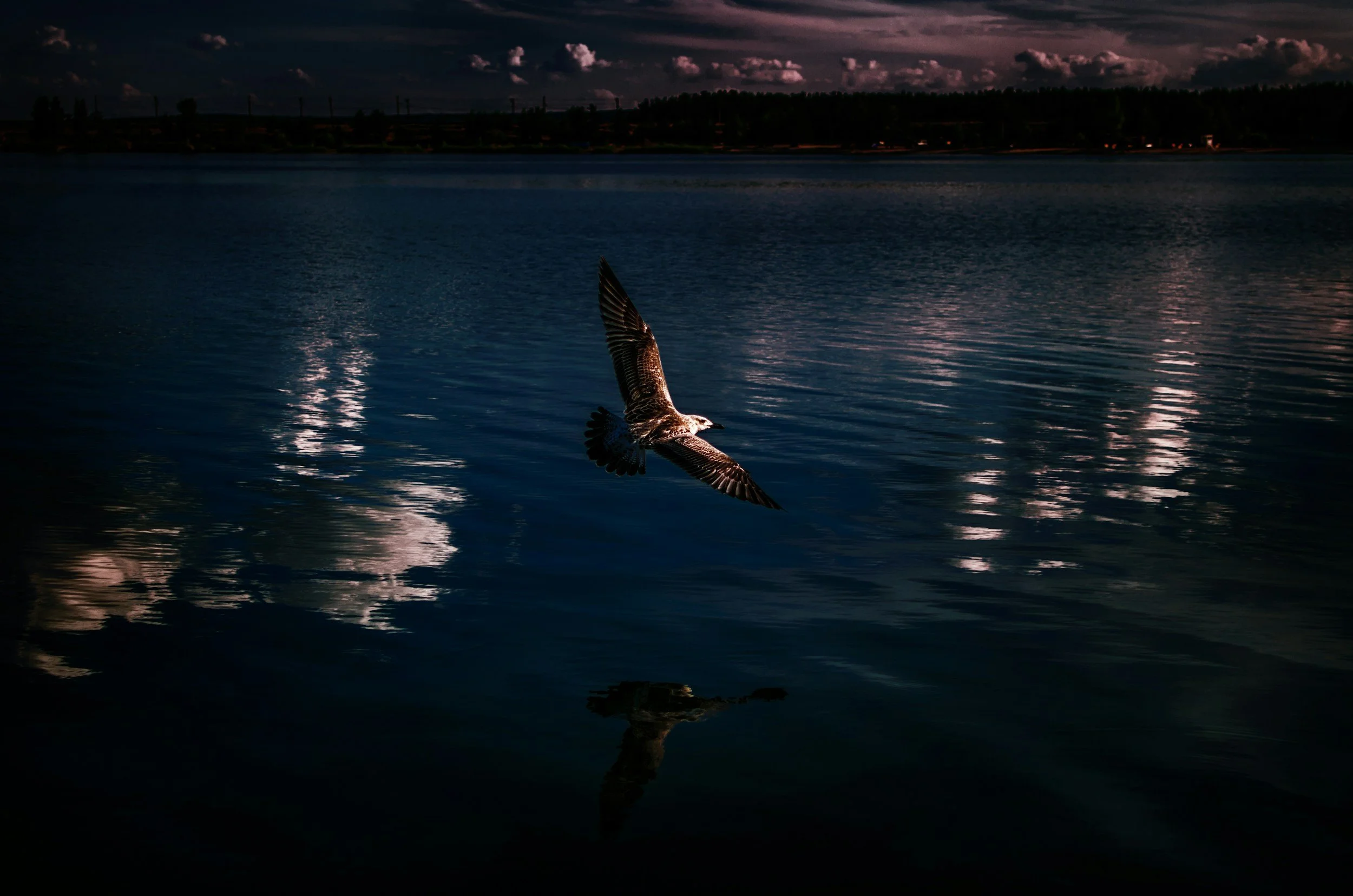
Every spring and fall, millions of birds travel through Michigan on their journeys between their summer nesting areas and winter homes. Many of these birds fly at night, using natural light from the moon, stars, and horizon to help guide them.
West Michigan lies along one of North America's major migration routes. As birds travel through the Great Lakes region, they rely on local forests, parks, neighborhoods, shorelines, and green spaces as places to rest and find food before continuing their journey.Unfortunately, bright artificial lighting can create challenges for migrating birds.Outdoor lights from buildings, parking lots, sports complexes, billboards, and homes can attract and confuse birds at night. Instead of continuing their migration, birds may circle brightly lit areas, become exhausted, and face a greater risk of colliding with buildings and windows.The good news is that simple lighting changes can help reduce these risks and make our communities safer for birds!Artificial Light at Night and Bird Migration
Artificial Light at Night (ALAN) refers to human-made lighting that brightens the night sky, including streetlights, building lights, billboards, parking lots, and residential outdoor lighting.Many migratory birds travel at night, using natural cues such as the stars and moon to navigate. Bright artificial lights can disrupt these navigation systems, causing birds to become disoriented, use valuable energy circling illuminated areas, and face an increased risk of colliding with buildings and windows.The Great Lakes region is one of the most important migration corridors in North America.
Millions of birds pass through West Michigan each spring and fall, relying on our forests, wetlands, parks, and neighborhoods as places to rest and refuel during their journey. In Michigan in 2006, the Detroit Audubon Society initiated the Safe Passage Great Lakes program. Learn more about Lights Out initiatives and bird migration:Watch: Lights Out for Birds (Cornell Lab of Ornithology)
This short animated video explains how artificial light at night affects migrating birds and simple actions that can help reduce bird collisions.
Video courtesy of Cornell Lab of Ornithology's BirdCast program.
During spring and fall migration, simple actions can make a big impact:
Turn off unnecessary outdoor lights overnight.Close blinds and curtains when lights are on indoors.Use only the light you need, where you need it.Check migration forecasts and dim the lights on peak migration nights.
Looking ahead, bird-friendly lighting matters too:
Choose shielded fixtures that direct light downward.Install motion sensors or timers.Use warm-colored bulbs.Reduce excess lighting in parking lots and landscaped areas.
Every light turned off can help migrating birds find their way safely.
You don't need to be a bird expert to make a difference.
Printable Resources and Guides
-
Outdoor lighting guidance and best practices:
Wildlife impacts of light pollution:
-
Audubon Lights Out Program
Information about bird-friendly lighting practices:
BirdCast Lights Out
Migration forecasts and tools for communities:
-
Information about how light pollution affects insects and pollinators:
To Protect Pollinators, We Need to Fight Light Pollution | Xerces Society
-
National Park Service
Information on night skies and light pollution:
Light Pollution Map
Explore nighttime lighting levels in your community:
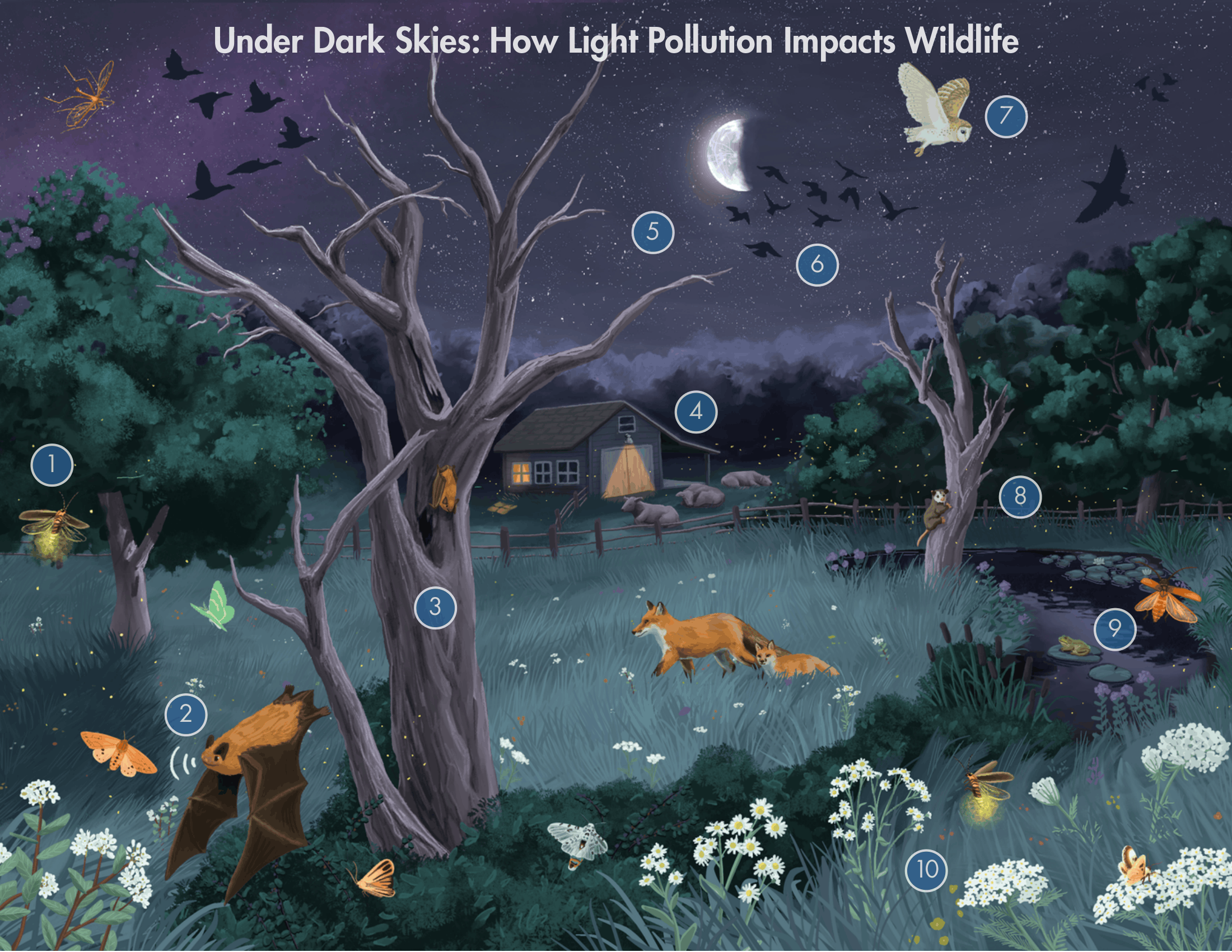
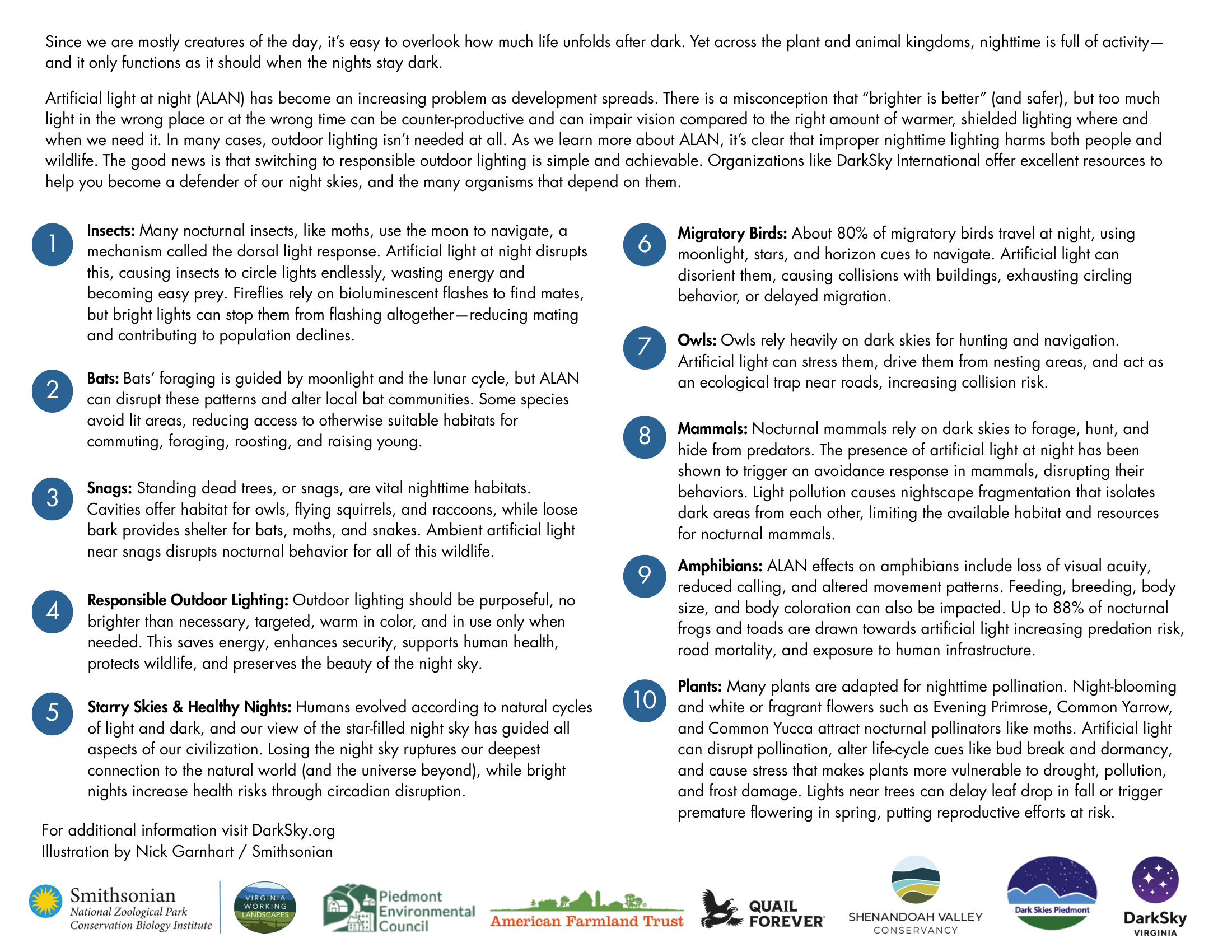
Can you identify the true statements about artificial light and bird migration? Learn more below!
-
✅ True! Warblers, thrushes, sparrows, vireos, and many other birds migrate under the cover of darkness.
-
❌ False! When many homes and businesses reduce unnecessary lighting, the combined impact can make migration much safer.
-
✅ True! Birds may become disoriented, circle illuminated areas, or collide with buildings and windows.
-
✅ True! Bats, moths, fireflies, and many other species benefit from darker nights.
-
❌ False! Communities of all sizes can contribute to—and help reduce—light pollution.
-
✅ True! Shielded fixtures, motion sensors, and targeted lighting can improve visibility and safety while reducing impacts on wildlife.